What Is a Spin Finish? A Guide for Synthetic Fiber Producers
A spin finish is the oil applied to synthetic filament yarn during spinning. This guide explains what the finish does on the yarn, how it is applied at the spinning position, and how mills match a finish to fiber type and spinning process.
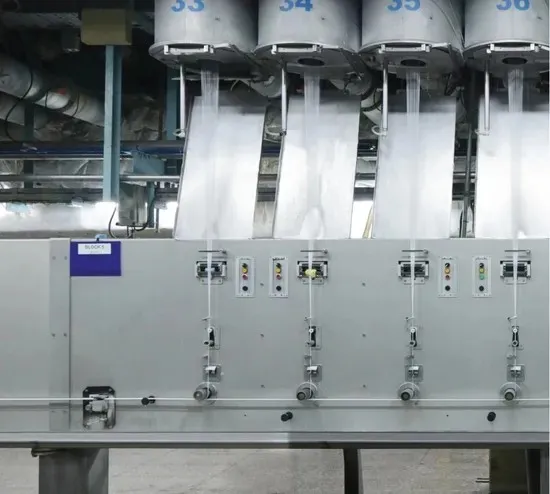
Spin Finish Defined: What the Oil Does on Synthetic Filament Yarn
A spin finish is the oil applied to synthetic filament during spinning. It coats the individual filaments as they leave the spinneret and travel through the spinning line, so the yarn is lubricated, friction and static are controlled, and the filaments are held together as a coherent bundle. Suretop manufactures spin finish oils for polyester, nylon, spandex and aramid fibers from its plant in Xiaoshan, Hangzhou.
The finish is a small share of the yarn, but it decides how that yarn behaves on the machine. Bare filament slides poorly against guides, heaters and rollers, and it builds static quickly. A correctly matched finish supplies a film that carries the yarn through drawing, texturing and winding without filament breaks, fuzzing or package defects.
- Lubricity against metal surfaces such as guides, godets and heaters
- Filament-to-filament friction control inside the bundle
- Static dissipation during high-speed running
- Cohesion that keeps the filament bundle together
- Compatibility with drawing, texturing, coning and knitting
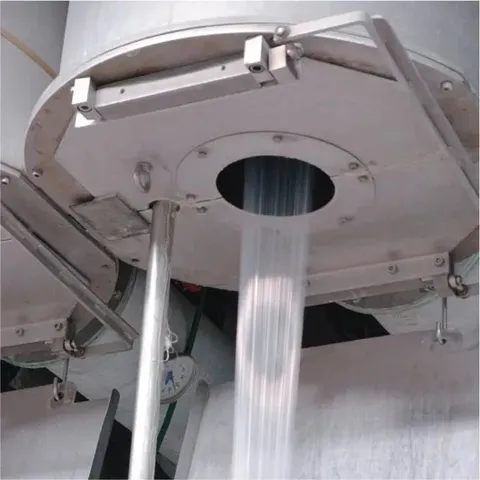
Filaments descending from circular spinning machine head 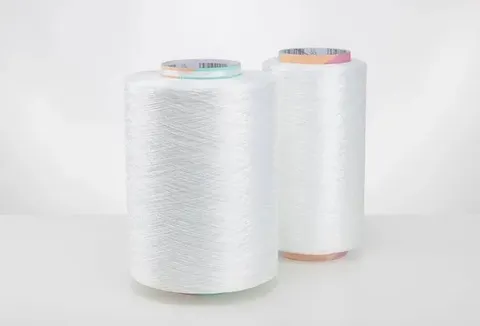
Two white filament yarn packages
Melt Spinning and Where the Finish Enters the Yarn Line
Melt spinning carries much of the polyester and nylon filament produced for mills. Polymer chips are melted, filtered and extruded through spinneret holes; the filaments cool, are drawn and are wound as a package. Spinning is the step that turns polymer into a continuous yarn that a mill can draw, texture, twist or knit. The finish enters that line before the yarn reaches the winder.
The properties of the finished yarn, such as denier, tenacity, elongation, crimp and bulk, come from the polymer and from the spinning and drawing conditions. The finish protects those properties while the yarn runs: it keeps filament breaks, fuzzing and static from disturbing the process, and it delivers the yarn to the next stage in a usable state. Polyester and nylon lines are covered in the polyester finish and nylon finish pages.
- Polymer melting and filtration
- Extrusion through the spinneret and cooling
- Drawing of the filament bundle
- Finish application at the spinning position
- Winding into a package
Fiber Finish Basics: What the Oil Does on Synthetic Yarn
Fiber finish is another name for the same product: the surface treatment applied to filament yarn during spinning. It lowers friction between filaments and between yarn and machine parts, prevents filament breakage and static build-up, and supports smooth downstream processing. When a mill asks for a fiber finish, it is asking for the spin finish that will sit on its yarn and carry it through the line.
Fibrefinish is simply an alternative written form of fiber finish. It refers to the same spin finish applied to synthetic filament yarn, and it performs the same roles on the yarn: lubrication, friction control, static control and cohesion of the filament bundle. The spelling changes; the function and the way the product is matched to the fiber do not.
A consistent fibre finish helps keep yarn properties uniform from package to package and keeps downstream processing stable, which matters to the mill that buys or processes the yarn. Suretop provides samples for customer testing and trial production, and can recommend the application rate for the customer’s spinning conditions.
Textile Lubricant Oil and How It Is Applied During Spinning
Finish is applied at the spinning position, after the filaments have cooled and before they are wound. The oil can go on as a neat product or as an emulsion, depending on the finish and the line. Kiss-roll systems pick up oil on a rotating roll that touches the yarn; metering systems deliver a controlled amount through a pump and an applicator. The application rate depends on fiber type, denier and process.
A textile lubricant is used on synthetic filament because dry filament running against guides, heaters and rollers generates friction and static. Too little lubricant gives high friction, filament breaks and static build-up. Too much can cause slippage on the drive rolls and leave residue on heaters and guides. The right level depends on fiber type and process, and is set with the spinning conditions in mind.
Because the same oil can behave differently on different lines, the starting point is the fiber and the process rather than a standard setting. Send your fiber type, spinning process, denier and equipment through the inquiry form to request a recommendation and a sample for trial production.
Yarn Lubricant and Fiber Lubricant: Friction, Cohesion and Static
A yarn lubricant works on the contact surfaces of the spinning line: guides, godets, heaters, rollers and the winder. It reduces filament-to-metal friction along that path and filament-to-filament friction inside the bundle, controls static, and gives the filaments enough cohesion to stay together. The result is a package that unwinds cleanly at the next stage instead of snagging, fuzzing or breaking out.
The lubricant film does not stop at the winder. It carries into drawing, texturing and knitting, where it influences friction, yarn tension and running behaviour. A finish that suits high-speed winding is not automatically right for texturing, and different contact surfaces ask for different friction levels. Formulations are therefore matched to the fiber and the process, and Suretop develops or adjusts formulations to the customer’s fiber type, spinning process and technical requirements.
Spin Finish in Textile Production: Matching Finish to Fiber and Process
Finish selection starts with the fiber and the process rather than with the oil itself. The same chemistry family behaves differently on a polyester line and a nylon line, and a finish built for high-speed winding is not automatically right for texturing. The practical factors are:
- Fiber type: polyester, nylon PA6 or PA66, spandex or aramid
- Process: POY, FDY, DTY or industrial filament yarn
- Denier and yarn type, including luster
- Downstream steps such as texturing, coning or knitting
- Contact surfaces and speeds on the spinning line
Suretop’s range covers spin finish oils for polyester, nylon (PA6 and PA66), spandex and aramid fibers, for POY, FDY, DTY and industrial filament yarn production. Related products include coning oils for nylon DTY. Suretop offers OEM/ODM supply and develops or adjusts formulations to the customer’s fiber type, spinning process and technical requirements, and provides samples for customer testing and trial production.
Matching a finish to a line is a review of fiber, process and equipment rather than a catalogue pick. Send the fiber type, process, denier and equipment through the inquiry form; other questions about spandex or aramid applications can go the same way, and a sample can follow for trial production on your own machines.
Request a quotation
Describe your fiber, process and equipment, and we will suggest a model and a sample.
Or write to sales@spinfinishoil.com